Why Norfolk Island?
The Heritage Preservation Foundation’s inaugural project focuses on safeguarding Norfolk Island’s unique history through the digitisation of its heritage records.
Norfolk Island occupies a vital place in Australia’s story. It forms part of the original British settlement that laid the foundations for the nation following the arrival of the First Fleet, led by Captain Arthur Phillip, at Botany Bay in January 1788.
Within 6 weeks of that historic landing, The HMS Supply was sent to establish a secondary settlement on Norfolk Island. Their arrival on 6 March 1788 marked the beginning of European habitation on the island and its role in Australia’s early colonial development.
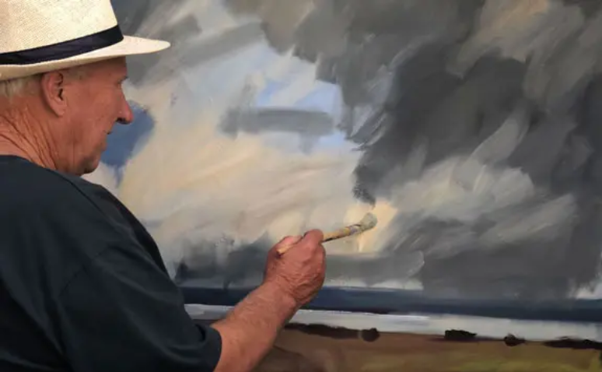
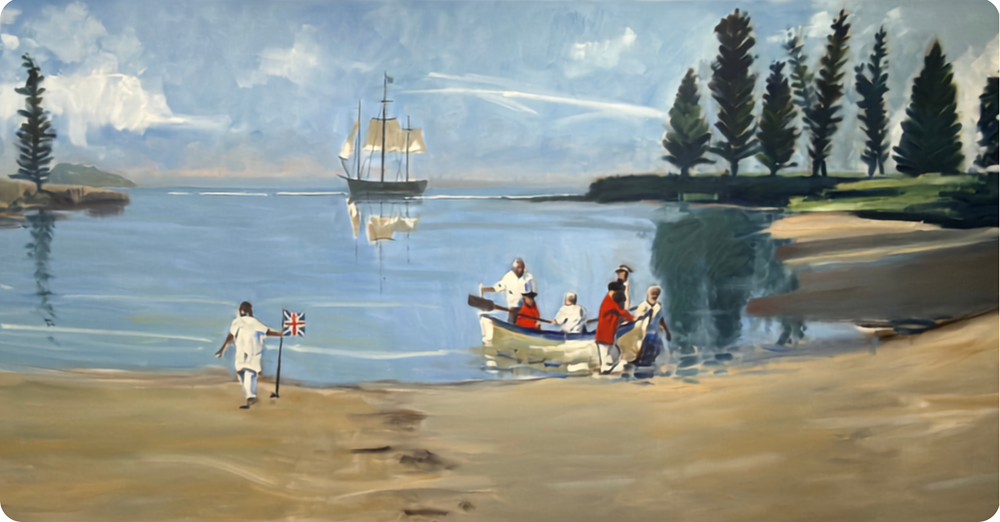
To support our fundraising efforts, we have commissioned a major artwork that captures this defining moment in history. Renowned Melbourne artist Clive Sinclair, a member of the prestigious Melbourne 20, was selected to create this piece. Measuring 4m x 2m, the painting will serve as a centrepiece for exhibitions and events promoting our preservation initiatives.
A Brief History of Norfolk Island
Norfolk Island was first sighted and mapped by Captain James Cook in 1774 during his exploration of Australia’s eastern coastline. He recognised the island’s potential as a settlement, noting its abundant timber and fertile landscape.
In 1788, HMS Supply became the first ship to arrive from the First Fleet, carrying a small group of marines, convicts, and officers tasked with establishing a new outpost.
The first landing party came ashore on 6 March 1788, formally beginning Norfolk Island’s colonial history and its ongoing connection to Australia’s national story.
Our Painting: First Fleet Arrival at Turtle Bay
Our commissioned painting by Clive Sinclair brings to life the arrival of the first settlers at Turtle Bay (now Emily Bay). The artwork captures both the scale and significance of this historic moment, offering a powerful visual connection to the past.
Clive Sinclair – The Artist
Clive Sinclair is a highly respected Melbourne-based artist known for his historical works and large-scale compositions. His expertise and attention to detail make him uniquely suited to interpret this important chapter in Australian history.
To learn more about Clive Sinclair and his work, visit his biography on the Victorian Artists Society website